Crypto staking
Crypto staking
Gemra is a staking platform for the GRA token that enables users to lock assets, earn rewards, and manage active positions in one place.
Gemra is a staking platform for the GRA token that enables users to lock assets, earn rewards, and manage active positions in one place.
Web3
2-week timeline
Introduction
Introduction
I was approached with the task of designing a single-token staking interface for Gemra, built around the GRA token. The challenge was to make staking approachable for users with little to no DeFi experience, while still feeling credible and efficient for experienced crypto users who expect speed and control.
I was approached with the task of designing a single-token staking interface for Gemra, built around the GRA token. The challenge was to make staking approachable for users with little to no DeFi experience, while still feeling credible and efficient for experienced crypto users who expect speed and control.
My role covered the full product design cycle. It began with research into existing staking products and common user failure points, followed by defining the product structure, interaction flows, and key decision moments where users commit to on-chain actions.
My role covered the full product design cycle. It began with research into existing staking products and common user failure points, followed by defining the product structure, interaction flows, and key decision moments where users commit to on-chain actions.
Research
Research
The research was focused on analyzing popular staking platforms and identifying common patterns in how users interact with staking interfaces. In reviewing a range of existing products, it became clear that many of them fall into similar pitfalls that make the experience intimidating or confusing, especially for newcomers. A frequent issue is overly complex terminology and flows that assume a high level of blockchain literacy, which leads to uncertainty about actions like approvals and lock periods.
The research was focused on analyzing popular staking platforms and identifying common patterns in how users interact with staking interfaces. In reviewing a range of existing products, it became clear that many of them fall into similar pitfalls that make the experience intimidating or confusing, especially for newcomers. A frequent issue is overly complex terminology and flows that assume a high level of blockchain literacy, which leads to uncertainty about actions like approvals and lock periods.
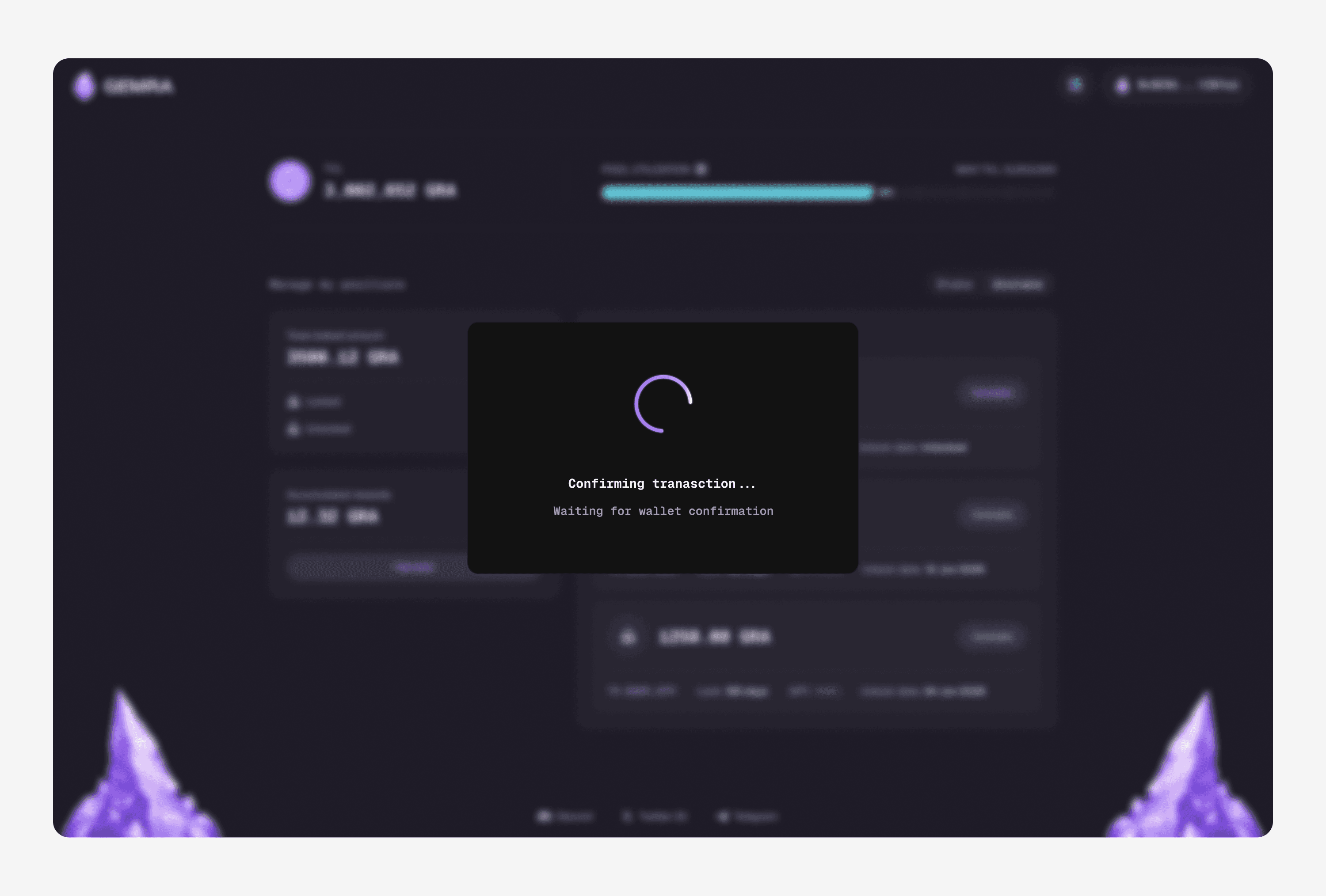
Many platforms also provide little to no feedback or preview before on-chain transactions, so users often don’t see the full implications of their choices until after a transaction is submitted. Other common problems include interfaces overloaded with data without clear prioritization, unclear indication of locked vs unlockable positions, and poor wallet or transaction state feedback that leaves users unsure whether an action succeeded or failed.
Many platforms also provide little to no feedback or preview before on-chain transactions, so users often don’t see the full implications of their choices until after a transaction is submitted. Other common problems include interfaces overloaded with data without clear prioritization, unclear indication of locked vs unlockable positions, and poor wallet or transaction state feedback that leaves users unsure whether an action succeeded or failed.
Staking flow overview
Staking flow overview
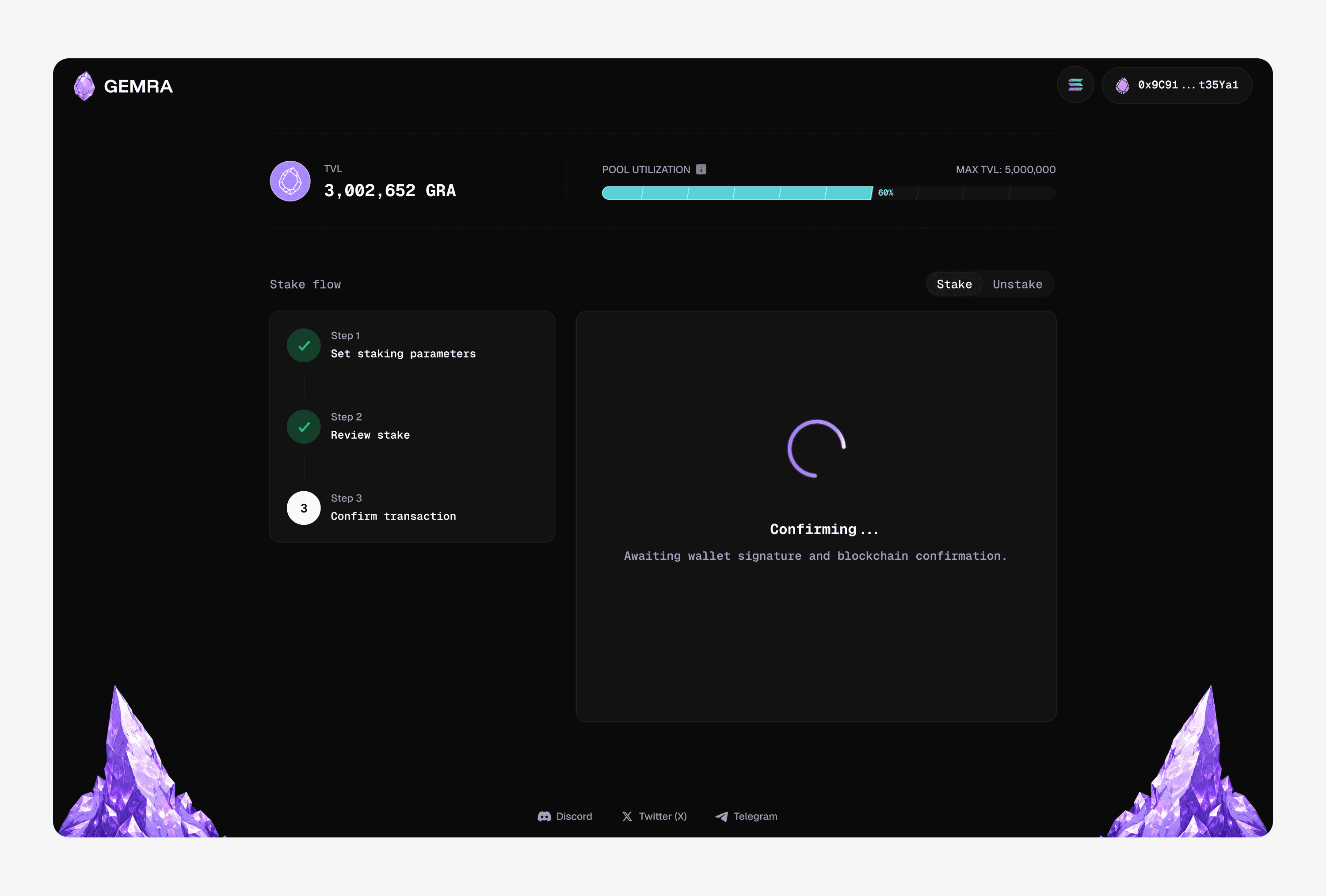
The staking flow was intentionally split into three explicit steps and presented to the user as a clear sequence. This decision was driven by the fact that staking involves real money and irreversible on-chain actions, where mistakes are costly and difficult to undo.
The staking flow was intentionally split into three explicit steps and presented to the user as a clear sequence. This decision was driven by the fact that staking involves real money and irreversible on-chain actions, where mistakes are costly and difficult to undo.
By separating input, review, and confirmation into distinct stages, the interface gives users a moment to pause and verify their decisions before committing. The preview step plays a key role here, allowing users to see staking parameters, lock periods, and expected outcomes in one place before signing a transaction. Even though this approach adds an extra click, it reduces uncertainty and helps users feel more confident about what they are approving.
By separating input, review, and confirmation into distinct stages, the interface gives users a moment to pause and verify their decisions before committing. The preview step plays a key role here, allowing users to see staking parameters, lock periods, and expected outcomes in one place before signing a transaction. Even though this approach adds an extra click, it reduces uncertainty and helps users feel more confident about what they are approving.
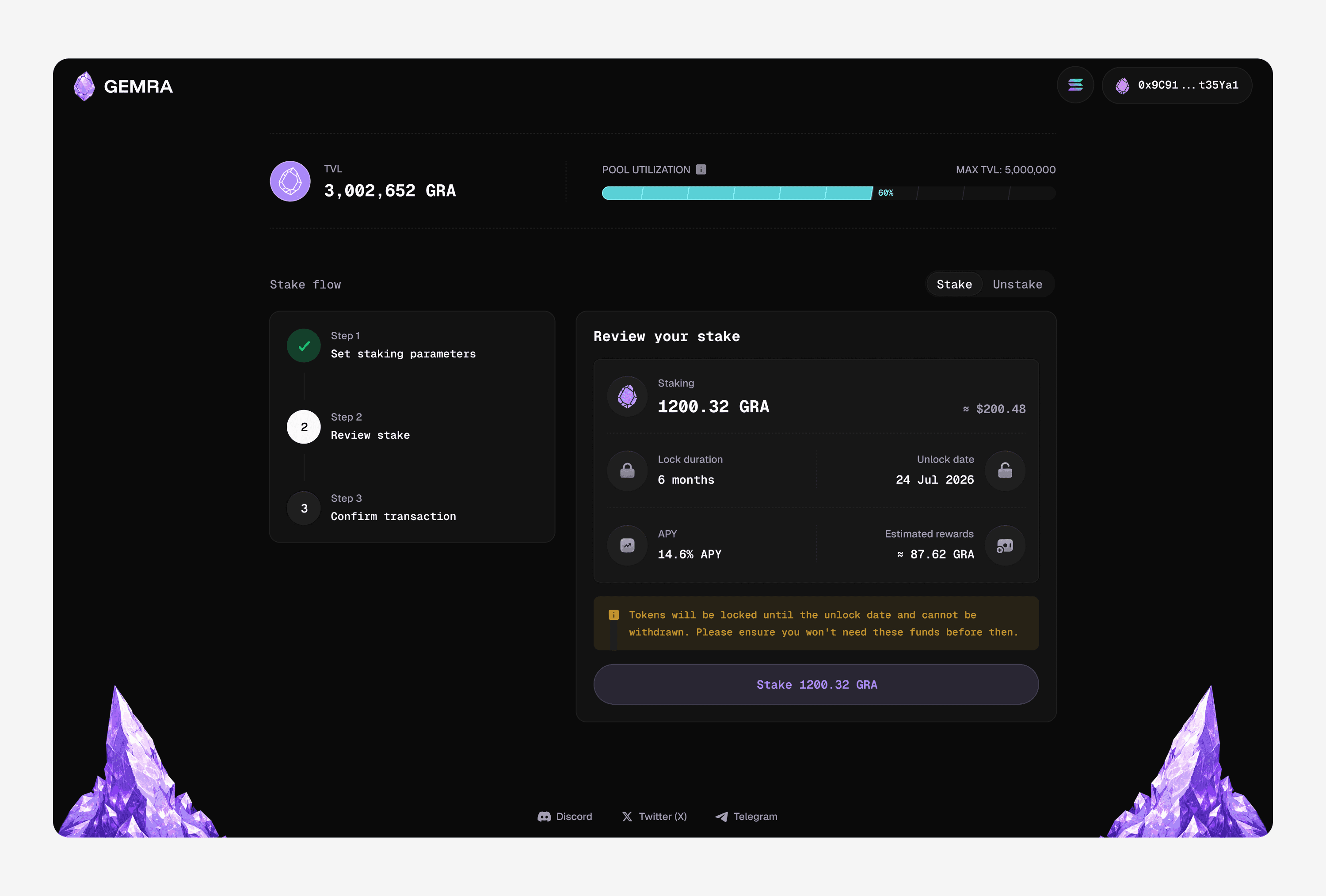
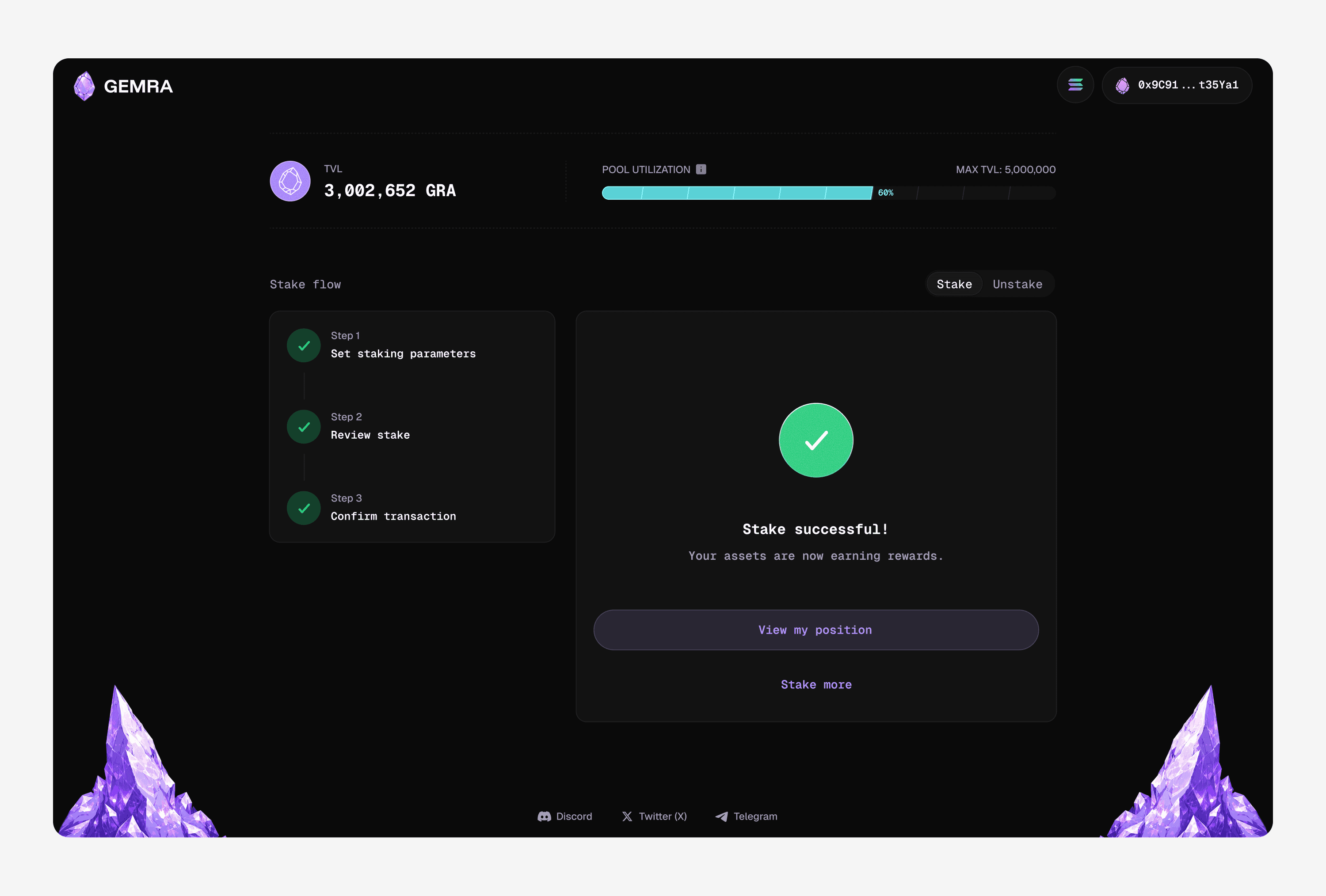

Above the staking form, a compact metrics block displays Total Value Locked (TVL) and Pool Utilization. This section was designed to provide context before users interact with the form, rather than leaving them alone with an isolated financial action.
Above the staking form, a compact metrics block displays Total Value Locked (TVL) and Pool Utilization. This section was designed to provide context before users interact with the form, rather than leaving them alone with an isolated financial action.
TVL communicates that the pool is active and already used by other participants. Seeing that value locked by the network helps users understand that staking is not an abstract or empty action, but part of an ongoing system with real activity and participation. This reduces the feeling of acting in isolation and reinforces confidence in the decision.
TVL communicates that the pool is active and already used by other participants. Seeing that value locked by the network helps users understand that staking is not an abstract or empty action, but part of an ongoing system with real activity and participation. This reduces the feeling of acting in isolation and reinforces confidence in the decision.
Pool Utilization adds a sense of progress and time sensitivity. Instead of a static number, a visual progress indicator reflects how much of the pool capacity is already used. This creates a live, dynamic impression and subtly signals that capacity is finite. From a business perspective, this encourages timely decisions, while from a UX perspective it helps users better understand the state of the pool and the implications of waiting.
Pool Utilization adds a sense of progress and time sensitivity. Instead of a static number, a visual progress indicator reflects how much of the pool capacity is already used. This creates a live, dynamic impression and subtly signals that capacity is finite. From a business perspective, this encourages timely decisions, while from a UX perspective it helps users better understand the state of the pool and the implications of waiting.
Unstaking
Unstaking
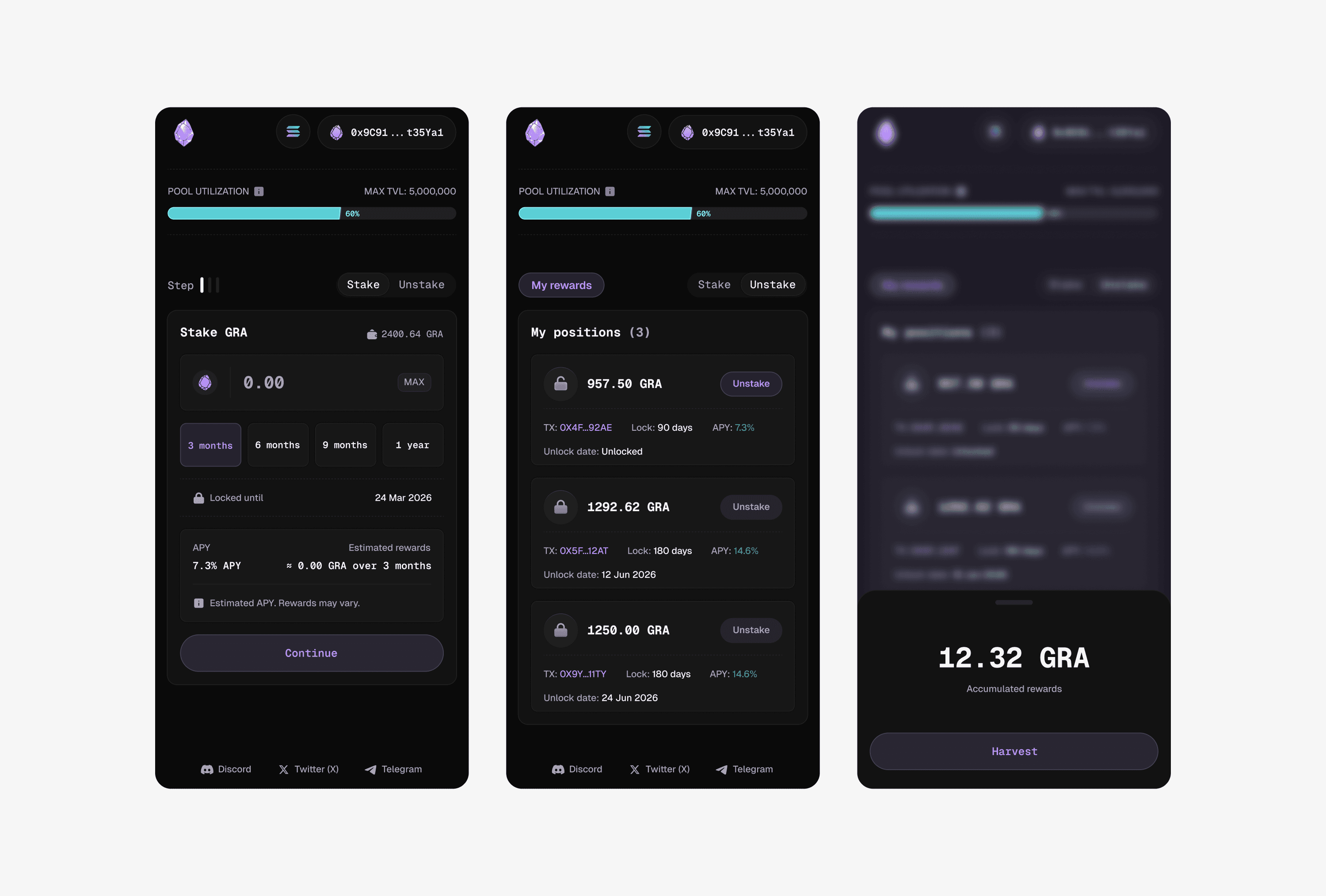
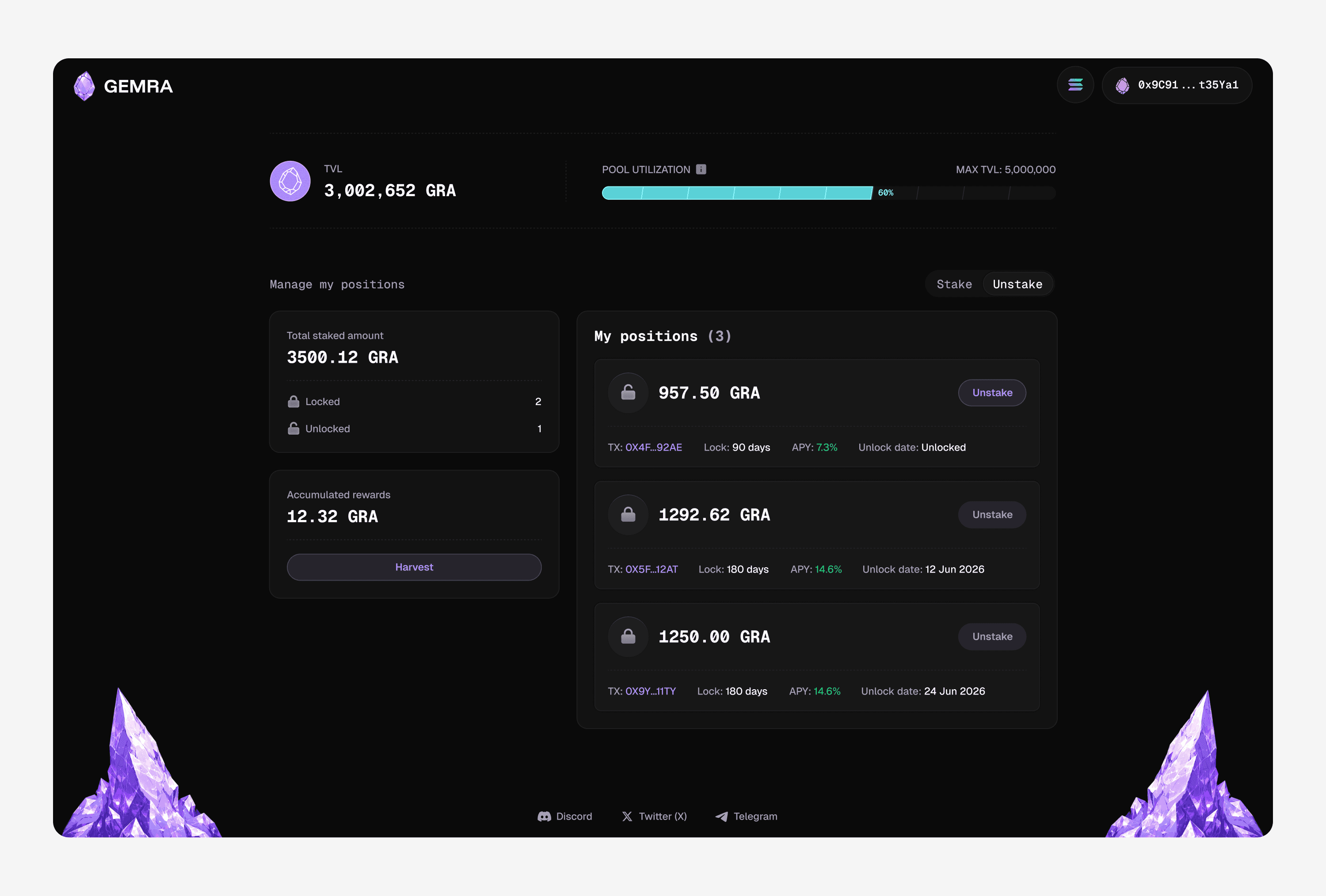
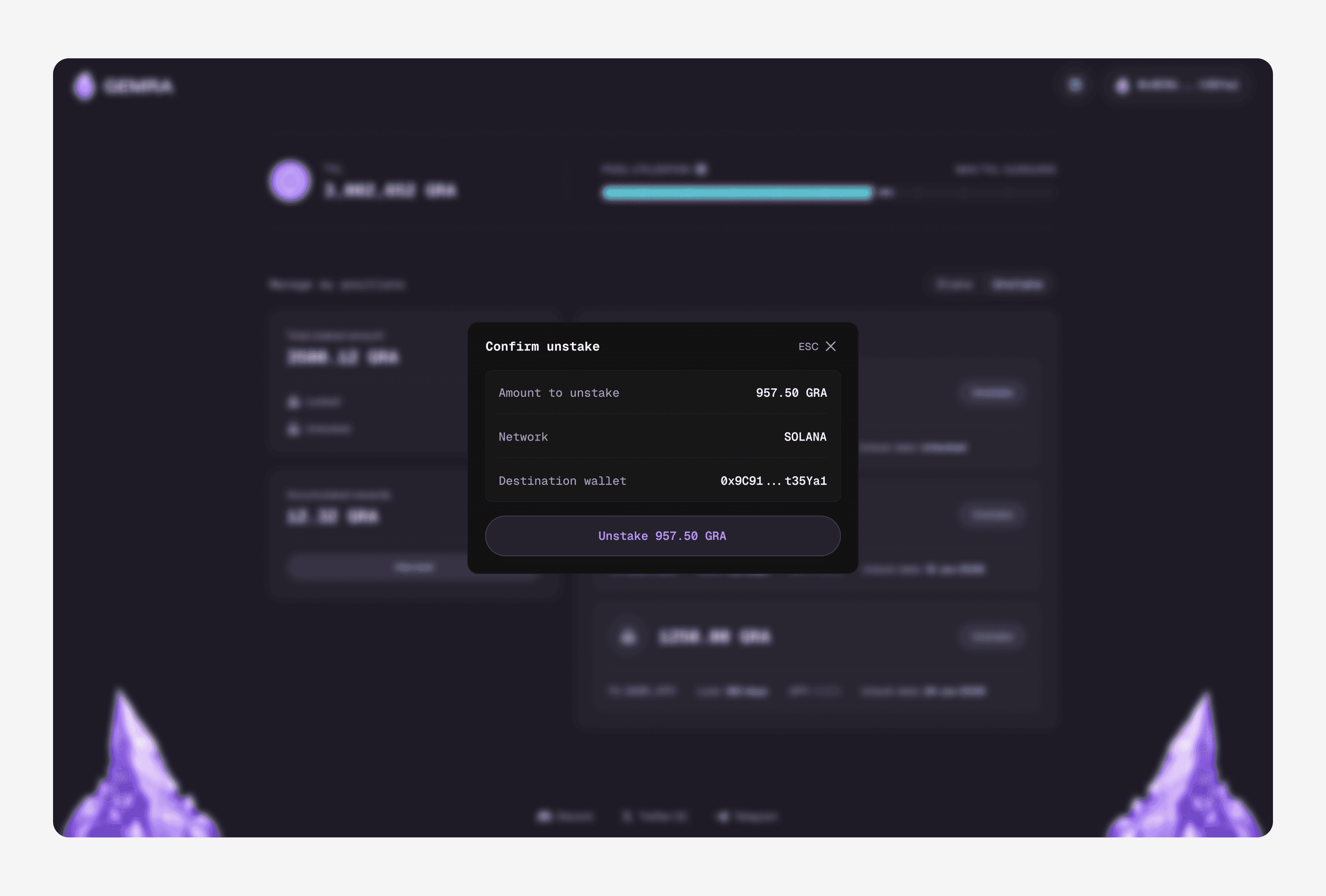
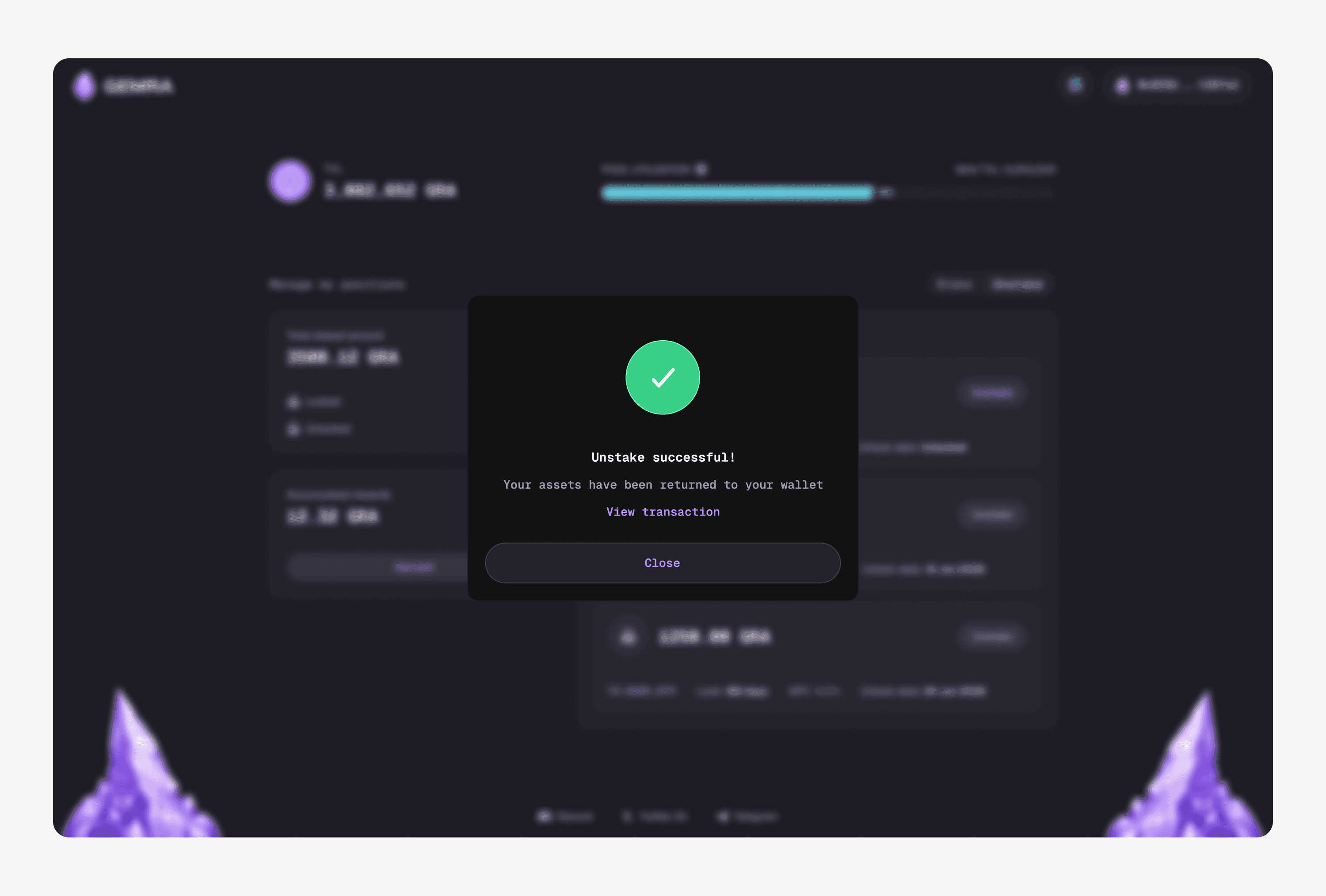
The unstaking screen is designed as a straightforward overview of existing staking positions. Instead of introducing new concepts or interactions, it focuses on surfacing all relevant information for each position in one place. For every stake, users can see the transaction hash, staked amount, APY, lock period, and unlock date, making it easy to understand the current state without navigating deeper.
The unstaking screen is designed as a straightforward overview of existing staking positions. Instead of introducing new concepts or interactions, it focuses on surfacing all relevant information for each position in one place. For every stake, users can see the transaction hash, staked amount, APY, lock period, and unlock date, making it easy to understand the current state without navigating deeper.
A dedicated Accumulated rewards block highlights earned rewards and provides a clear Harvest action. This allows users to collect rewards independently from unstaking, without forcing them into additional steps or decisions.
A dedicated Accumulated rewards block highlights earned rewards and provides a clear Harvest action. This allows users to collect rewards independently from unstaking, without forcing them into additional steps or decisions.
Conclusion
Conclusion
When I work on Web3 products, I usually start from a simple assumption: the person using this interface might have discovered crypto just yesterday. A lot of staking and DeFi products are still built by crypto people for crypto people. They rely on heavy terminology and implicit assumptions, while skipping over the actual staking terms. Important details like lock periods, estimated rewards, and withdrawal restrictions are often shown too late or not clearly enough.
When I work on Web3 products, I usually start from a simple assumption: the person using this interface might have discovered crypto just yesterday. A lot of staking and DeFi products are still built by crypto people for crypto people. They rely on heavy terminology and implicit assumptions, while skipping over the actual staking terms. Important details like lock periods, estimated rewards, and withdrawal restrictions are often shown too late or not clearly enough.
This project was about doing the opposite. Rather than fitting everything onto one screen or chasing the fastest flow, the focus was on guiding users step by step and making staking terms visible before they commit. It adds an extra step, but helps users clearly understand lock periods, rewards, and when funds can be withdrawn.
This project was about doing the opposite. Rather than fitting everything onto one screen or chasing the fastest flow, the focus was on guiding users step by step and making staking terms visible before they commit. It adds an extra step, but helps users clearly understand lock periods, rewards, and when funds can be withdrawn.
For me, this work reinforced a simple idea: Web3 products won’t become mainstream by adding more features or more data, but by making important actions feel understandable and intentional, even for someone who is not a “crypto native”.
For me, this work reinforced a simple idea: Web3 products won’t become mainstream by adding more features or more data, but by making important actions feel understandable and intentional, even for someone who is not a “crypto native”.